A community catalog brings Niklaus Wirth's Oberon machine to Cozystack as an installable app
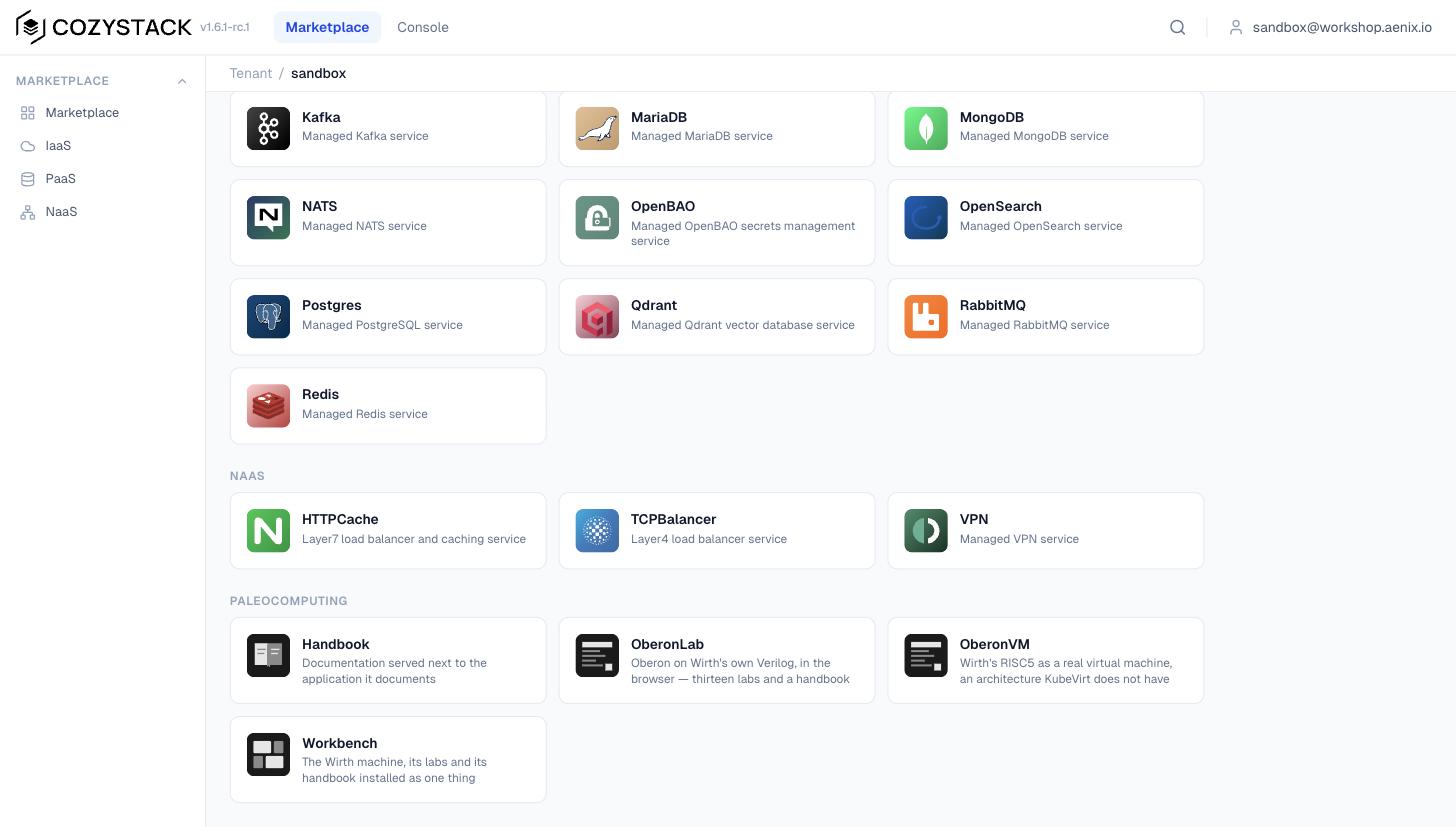
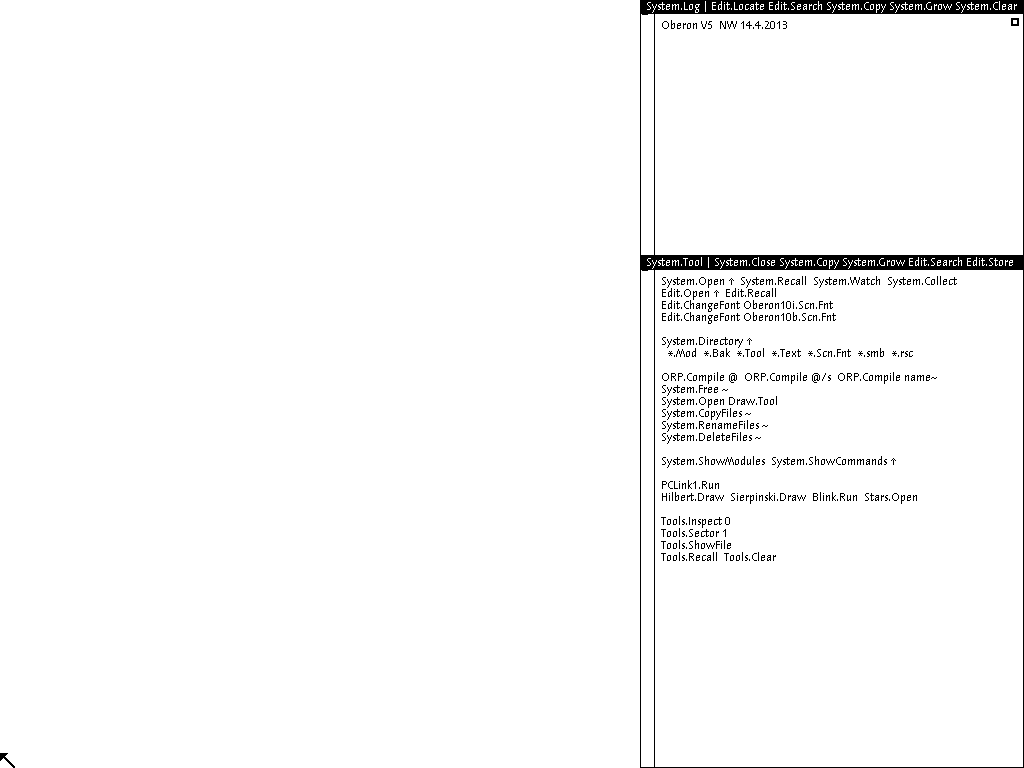
A community contributor has published a pluggable Cozystack catalog that does something Cozystack was never built to do: it runs Niklaus Wirth’s RISC5 processor — the tiny teaching CPU Wirth designed for the 2013 edition of Project Oberon — as an ordinary cloud VM. From a tenant’s point of view, the 1980s Oberon workstation installs like any other app in the catalog: a short form, or a single OberonVM resource, and the machine boots on a VNC console next to the PostgreSQL and Kubernetes instances. The whole thing is open source under Apache 2.0; the QEMU processor model, like QEMU itself, is under the GPL.
What makes it interesting for the platform is that it adds a brand-new machine architecture without forking either Cozystack or KubeVirt. It leans entirely on extension points that already exist. A KubeVirt sidecar handler intercepts a perfectly ordinary VM definition and reshapes it into Wirth’s machine — swapping the architecture, the emulator, the bootloader and the disk image. libvirt, which won’t take an unknown architecture on the machine definition alone, needed a ten-line patch in five places, written so that the list of architectures comes from a data file rather than new code. And the shared virt-launcher image that carries the patched libvirt is applied by a small reconciling component that watches the KubeVirt configuration and backs its change out cleanly if anything looks wrong.
The catalog is delivered through the community cozymarketplace mechanism (from the design proposals in
cozystack/community): a tenant-facing part with the machine, a browser lab and a handbook installs with an ordinary cozypkg tap / cozypkg add, while the two parts that touch the whole cluster — the boot images and the launcher patch — install only with the administrator’s explicit consent. It runs on the two latest KubeVirt releases and on both Intel and Arm servers.
One finding from the write-up is worth flagging for any operator, because it is a property of Cozystack’s defaults rather than of this project. Changing the shared virt-launcher image is a cluster-wide action, and with automatic workload updates enabled by default, doing it on a live cluster will trigger a live migration of every VM in the cluster. The author hit exactly this — a swap that, sixteen seconds later, began migrating the whole cluster. The catalog component now refuses to make the change while auto-update is on and waits for an explicit opt-in, but the underlying behavior is a good reminder to check workloadUpdateStrategy before touching KubeVirt-wide settings anywhere.
This is a community experiment, not part of the standard Cozystack application set, and it is a fine demonstration of how far the pluggable catalog and the KubeVirt sidecar can be pushed. The full technical write-up — nine days of running Wirth’s processor in a browser, in QEMU, and in Kubernetes, and measuring what array-bounds checking actually costs — is on the project site at tym83.github.io/paleocomputing, with all sources in github.com/tym83/paleocomputing.